When Your Desert Pullout Goes Wrong: Lessons from Dubai Off-Roads
Driving in Dubai often means trading city traffic for open desert within twenty minutes. The appeal is obvious: wide sandy horizons, the chance to test your vehicle on terrain that feels genuinely wild, and a break from the glass-and-steel grid. But that same desert that draws you in can hold you fast. I have lost count of the times I have watched a promising afternoon turn into a recovery job. The phrase "Desert pullout" sounds simple enough. You see a track, you turn off the tarmac, and you expect to drive back out when you are done. Reality is more complicated.
Soft sand, sudden dips, and the heat that saps both driver and machine all play a part. Over the years I have worked with Car Recovery Dubai on enough of these calls to know that a desert pullout is never just a pullout. It is a test of preparation, judgment, and sometimes patience. This article walks through what actually happens when a desert drive stalls, and how to handle it without making things worse.
Why a Desert Pullout Is Not Like a Highway Stop
On a paved road, pulling over is straightforward. You signal, you slow, you park. The ground is stable and the conditions are predictable. In the desert, everything changes. The surface can shift from hard-packed sand to soft powder within metres. What looked like a gentle slope from the road may hide a steep drop on the other side. And the moment you feel the vehicle lose traction, the situation starts to compound.
A common mistake is to keep pressing the accelerator when the wheels start to spin. That only digs the vehicle deeper. By the time the driver realises they are stuck, the undercarriage is often resting on sand, with no clearance left. That is when a simple desert pullout becomes a recovery job. I have seen vehicles that were stuck for less than five minutes require a winch and a steady hand to get free, because the driver kept trying to power out.
What a Real Recovery Looks Like
When a call comes in for a stuck vehicle, the first thing we assess is the access. A recovery truck needs a solid path to the vehicle, and in soft sand that can be a problem in itself. Sometimes the recovery vehicle has to stop a hundred metres away and use a long winch cable. Other times a tow truck can drive right up, but only if the approach is firm enough.
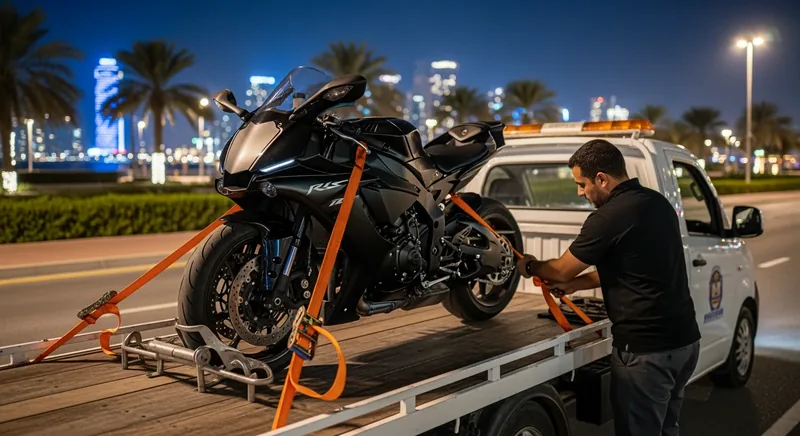
Car Recovery Dubai handles these situations every day, and the key is to read the ground before committing. A driver who rushes in can end up stuck alongside the vehicle they came to rescue. That doubles the problem and the time. So the process is slow, deliberate, and focused on getting the vehicle out without damaging it further.
One detail that surprises many drivers is that a recovery can be harder on the vehicle than the original drive. If the sand has packed around the wheels and axles, the tow truck has to break that seal. That puts stress on suspension components, and sometimes on the chassis. A good recovery operator knows how to angle the pull, use snatch blocks, and adjust tension to minimise that stress. It is not brute force. It is technique.
Common Mistakes Drivers Make Before Calling for Help
Most desert pullout problems share a few patterns. Recognising them early can save time and money.
- Driving alone without a second vehicle. A solo driver has no one to tow or push. Even a basic recovery becomes a full rescue.
- Ignoring tyre pressure. Running standard highway pressure on sand reduces traction and increases the chance of digging in. Dropping to around 15 psi makes a huge difference, but you need a compressor to reinflate afterwards.
- Turning too sharply. A sharp turn on soft sand can cause the rear wheels to slide sideways, creating a rut that traps the vehicle.
- Stopping in a low spot. If you stop at the bottom of a dune, you lose the momentum to climb out. Always park on level or slightly raised ground if possible.
- Panicking and digging. Digging out sand from around the wheels without a plan can make the vehicle settle deeper. Sometimes lifting the vehicle with a jack and placing traction boards under the wheels is the only clean way out.
These mistakes are not signs of carelessness. Most drivers are simply used to roads that hold firm. The desert does not forgive that assumption.
What to Do When You Are Stuck
If you find yourself in a situation where the vehicle will not move, the first rule is to stop trying to force it. Turn off the engine, get out, and look at the clearance under the chassis. If the vehicle is sitting on its belly, more throttle will only dig the wheels in deeper. You need to create space.
If you have recovery gear, use it. A shovel, traction boards, and a hand winch can get you out in under an hour. If you do not have gear, do not wander off looking for help. The desert is disorienting, and the heat can turn a minor problem into a medical one quickly. Stay with the vehicle, call a professional recovery service, and wait in the shade of the vehicle if you can.
This is where the phrase "Desert pullout carrecoverydubai" becomes relevant. Searching that term brings up services that are built for exactly this scenario. They know the terrain, they carry the right equipment, and they can reach most parts of the Dubai desert within a reasonable time. Keeping that number saved in your phone is a small step that can save hours of stress.

Preparing for a Desert Drive: Practical Steps
Preparation is not about buying expensive gear. It is about thinking through the trip before you leave the tarmac. Here are the essentials that experienced desert drivers carry.
- A tyre pressure gauge and a portable compressor, so you can deflate for sand and reinflate for the road.
- A recovery strap or kinetic rope rated for your vehicle's weight. Cheap straps snap under load and can cause injury.
- A shovel and a pair of traction boards. Even a short board can give the wheels enough grip to move a few metres.
- Water and a basic first aid kit. The desert heat does not care about your schedule.
- A charged phone and a GPS or offline map. Cell signal drops in many desert areas, and knowing your coordinates speeds up any recovery.
None of these items are expensive. Most can be stored in the boot without taking much space. But they turn a desert pullout from a crisis into a manageable delay.
The Real Cost of an Unprepared Desert Pullout
Beyond the recovery fee, there are hidden costs. Damaged suspension components, bent tie rods, or a cracked differential can turn a single stuck vehicle into a repair bill that dwarfs the recovery charge. I have seen a vehicle that was stuck for less than ten minutes end up with a seized wheel bearing because sand got into the hub while the driver was rocking the car back and forth. The recovery cost was modest. The repair cost was four times that.
There is also the cost of time. A recovery that could take forty minutes with the right equipment can stretch to three hours if the operator has to navigate difficult terrain or wait for a second vehicle. And if the stuck vehicle is blocking a track, other drivers may get stuck too. I have been on calls where one stuck car created a chain reaction of three vehicles, all because the first driver did not call for help early enough.
Car Recovery Dubai has seen these patterns repeat. The company's team knows that a quick response depends on clear communication. When you call, give them your exact location, the vehicle type, and the condition of the ground around it. That helps them bring the right truck and the right gear. A vague description can mean extra trips or the wrong equipment.
Using the phrase "Desert pullout carrecoverydubai" when you search or when you describe your situation to a dispatcher ensures that you are connected to a service that understands the local sand conditions. The desert around Dubai is not the same as the desert in other emirates. The sand is finer in some areas, harder in others, and the recovery techniques differ accordingly. A general tow truck operator may not have the experience to handle a vehicle that is high-centred on a dune. A specialist does.

Final Thoughts
Driving in the desert is one of the best ways to see the landscape around Dubai. The space, the silence, and the light are unmatched. But the desert is not a road. It does not offer the same guarantees. A desert pullout that goes wrong is not a sign of bad driving. It is a sign that the driver met a situation that required more than the vehicle could give.
The best outcome is one where you drive out under your own power, having learned something about the terrain. The second best is a clean recovery that gets you back on the road without damage. Both outcomes are possible with the right mindset and the right preparation. The worst outcome is the one where pride or panic turns a small problem into a big one.
If you ever find yourself in that position, remember that calling for help early is the smart move, not the embarrassing one. And if you are searching for a way out, the term "Desert pullout carrecoverydubai" will point you toward people who have done this before. They know the sand, they know the vehicles, and they know how to get you home.